How to Choose the Right Hydroponic System
There's no single 'best' hydroponic system — the right choice depends on what you're growing, how much space you have, your budget, and how hands-on you want to be. This guide breaks down the most popular systems so you can make an informed decision.
Deep Water Culture (DWC)
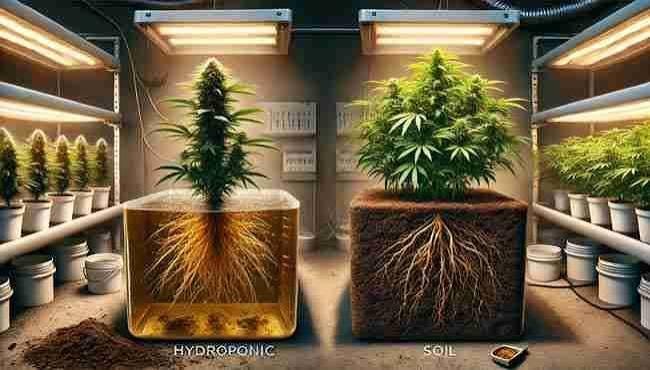
DWC is one of the simplest and most effective hydroponic methods. Plants are suspended in net pots above a reservoir of oxygenated nutrient solution, with roots hanging directly into the water. An air pump keeps the solution oxygenated. DWC delivers fast growth rates and is easy to build DIY. It's ideal for large plants like tomatoes, peppers, and cannabis. The main downside: if your pump fails, roots can dry out quickly.
Nutrient Film Technique (NFT)
In NFT systems, a thin film of nutrient solution continuously flows over the roots in a slightly tilted channel. Roots are exposed to both nutrients and air simultaneously, promoting rapid growth. NFT is popular for leafy greens and herbs in commercial operations. It's efficient with water and nutrients, but requires a reliable pump — any interruption can quickly stress or kill plants.
Kratky Method
The Kratky method is the simplest of all — no pump, no electricity, no moving parts. Plants are suspended above a reservoir of nutrient solution, and as they drink the water down, an air gap forms that oxygenates the roots. It's a passive, set-and-forget system perfect for lettuce, herbs, and other low-maintenance crops. Not suitable for large or fast-growing plants that need more oxygen.
Ebb & Flow (Flood and Drain)
Ebb & Flow systems periodically flood a growing tray with nutrient solution, then drain it back into a reservoir. This cycle — typically 2–4 times per day — delivers nutrients while allowing roots to access oxygen between floods. It's versatile and works with many growing media. The complexity of timers and plumbing makes it better suited for intermediate growers.
Wick Systems
Wick systems use an absorbent material (like cotton rope) to passively draw nutrient solution from a reservoir up to the growing medium. They're the simplest active system — no pumps or timers needed. However, they're slow and only suitable for small, low-demand plants like herbs. Not recommended for anything larger.
All-in-One Countertop Systems
For most beginners, an all-in-one countertop system like the AeroGarden Harvest or iDOO Hydroponics Kit is the best starting point. These systems handle everything — reservoir, pump, LED light, and timer — in one compact unit. They use a modified DWC or aeroponic approach and are optimized for herbs, lettuce, and small vegetables. You simply add water, nutrients, and seeds.
Frequently Asked Questions
What is the easiest hydroponic system for beginners?
All-in-one countertop systems like the AeroGarden Harvest or iDOO kit are the easiest starting point. They combine reservoir, pump, LED light, and timer in one unit. The Kratky method is also beginner-friendly for herbs — no pump or electricity needed.
What is the difference between DWC and NFT hydroponics?
In DWC (Deep Water Culture), roots hang in a reservoir of oxygenated nutrient solution. In NFT (Nutrient Film Technique), a thin film of solution flows continuously over the roots in a channel. DWC is simpler and better for home growers; NFT is more common in commercial operations.
Which hydroponic system produces the highest yield?
DWC and NFT systems generally produce the highest yields for most crops because roots have constant access to oxygen and nutrients. For home growers, a well-maintained countertop DWC system can produce impressive harvests of herbs and greens.
Top Picks
Looking for the best beginner hydroponic systems? We've reviewed and ranked the top kits.
Ready to get growing?
Find the perfect system for you
We've tested and ranked the best beginner hydroponic kits so you don't have to.
View Best Hydroponic Systems